What the official standard asks
Answer first: 2.MD.C.8 is a Grade 2 standard. Students solve word problems involving dollar bills, quarters, dimes, nickels, and pennies, using the dollar ($) and cent (¢) symbols appropriately. A useful 15-minute routine is: name and value the coins, model one story, solve one with a partner, explain the representation, and finish with one independent check.
This page separates Grade 1 readiness from Grade 2 standard work, gives original examples, and treats an app as optional practice after instruction—not as a replacement for concrete coins, drawings, discussion, or teacher judgment.
“Solve word problems involving dollar bills, quarters, dimes, nickels, and pennies, using $ and ¢ symbols appropriately. Example: If you have 2 dimes and 3 pennies, how many cents do you have?”Common Core State Standards Initiative: 2.MD.C.8
California lists the corresponding standard as 2.MD.8 with the same wording in the California Department of Education content standards. The standard covers money word problems; it does not say every Grade 2 learner must use formal decimal notation or treat making change as the entire standard.
A Grade 2 learner should be able to read a short situation about money, identify the relevant bills or coins, find a total or difference, and record the result with the appropriate money symbol. The learner may use real or play money, a drawing, a table, a number line, counting on, or an equation. Ask for an explanation of the method, not only a final number.
Grade 1 readiness versus Grade 2 work
Grade 1 foundation
Name common coins, match each coin to its value, sort by type, skip-count by 5s or 10s, count on, and compare small amounts. Call this readiness—not direct mastery of 2.MD.C.8.
Grade 2 application
Apply bill and coin values in word problems, use $ and ¢ appropriately, and explain a concrete, drawn, written, or mental strategy.
Later-grade stretch
Add multi-step problems, decimals, and formal making-change situations without presenting them as requirements of 2.MD.C.8.
A learner who still confuses a dime's size with its value needs more recognition and counting practice before being asked to solve a long story.
The Illustrative Mathematics Grade 2 money lesson is a useful instructional reference for money stories and related standards; it is not an endorsement of Cointastic or content copied into this guide.
Prerequisites and materials
Before the routine, check that students can:
- Name a penny, nickel, dime, and quarter and state each value.
- Recognize a $1 bill and understand that 100¢ has the same value as $1.
- Count by 1s, 5s, 10s, and 25s, at least with support.
- Add and subtract within the numbers used in the story.
- Identify what a one-step story asks and distinguish the number from its unit: 37¢ is not $37.
Use a small tray of real or play U.S. coins, a one-dollar bill or drawing, a pencil, and a half-sheet exit ticket. No app or printer is required.
Four worked problems with $ and ¢
These original examples invite a coin model, drawing, number sentence, or spoken strategy.
What is the tray total?
A tray has 1 quarter, 1 dime, 1 nickel, and 3 pennies. How many cents are in the tray?
25¢ + 10¢ + 5¢ + 3¢ = 43¢43¢ is also $0.43 when written as dollars. Ask: “Why is the answer written with the cent symbol first?”How much does Luis have?
Luis has one $1 bill, one quarter, one dime, and two pennies. How much money does he have?
$1.00 + 25¢ + 10¢ + 2¢ = $1.37Converting first also works: 100¢ + 25¢ + 10¢ + 2¢ = 137¢. Both forms describe the same amount.What remains after a purchase?
A notebook costs 68¢. Sam has a $1 bill. How many cents will be left?
100¢ − 68¢ = 32¢Check by adding: 68¢ + 32¢ = 100¢. This is useful preparation for everyday change, but making change is not the entire standard.How much is in the class jar?
A class jar has 2 quarters, 3 dimes, and 4 pennies. What is the total?
50¢ + 30¢ + 4¢ = 84¢Compare with counting every coin separately. Ask: “Which grouping made your counting easier, and how do you know both models match?”A 15-minute classroom routine
Use this as a warm-up, math-center launch, intervention check, or small-group lesson.
- 1Notice and name · 2 minutes
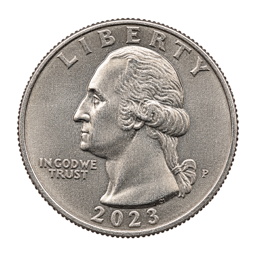
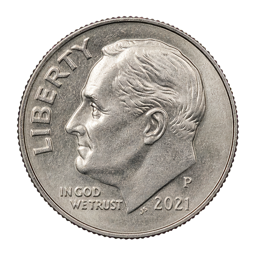
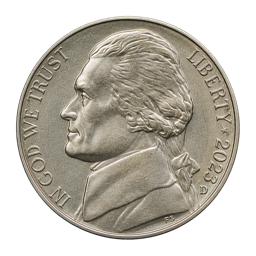
Display a quarter, dime, nickel, and penny. Name each coin and value; address the misconception that a larger coin must be worth more.
- 2Model · 3 minutes
Build the 43¢ example, sort by type, count in a convenient order, and explain why the cent symbol belongs with the answer.
- 3Partner build · 4 minutes
One partner builds or draws the $1.37 example while the other records and explains. Then switch roles.
- 4Story solve · 3 minutes
Use the 68¢ notebook problem, compare representations, and verify with the check equation.
- 5Independent exit · 3 minutes
Use the 84¢ jar or a new small pile. Require the answer plus: “I started with ___ because ___.”
For a 20-minute version, add a student-created story and a second representation. If devices are available, reserve the final few minutes for optional app practice after students show the coin or paper model.
Support, on-level, and stretch options
Reduce the load
- Start with one coin type, then combine two types; keep totals below $1 at first.
- Provide the U.S. coin-value reference.
- Use a ten-frame, open number line, labeled coin drawings, or a running-total mat.
- Read the story aloud and underline the amount and question.
- Ask one prompt at a time: “What coin is this?” “What is its value?” “What is the total now?”
Model and explain
- Mix quarters, dimes, nickels, and pennies in totals below or around $1.
- Require a model, equation, and correct $ or ¢ notation.
- Compare largest-to-smallest and grouped counts, then verify.
- Move from a visible coin set to a word problem without pictures.
Extend carefully
- Show two different coin groupings for the same amount.
- Write a matching word problem for 75¢ or $1.25.
- Use a dollar bill with a cents amount and find the difference.
- Offer count-up or change-due work as an extension—not the whole 2.MD.C.8 requirement.
Printable practice and answer-key outline
A dedicated 2.MD.C.8 PDF has not been released. Use the existing regional printable library until a standards-specific packet is produced.
A future one- or two-page packet can include:
- Four coin-value matches, two small piles to total, and one “build the amount two ways” prompt.
- Four one-step stories mixing $ and ¢, including one with a $1 bill and one asking for a difference.
- Two explain-your-strategy items, one partner-created story, and one optional change extension labeled beyond the core practice.
- A teacher header with Grade 2, 2.MD.C.8, 10–15 minutes, materials, and “not a formal assessment.”
- An answer key with each final amount, correct symbol, one valid equation or grouping, and a note where multiple representations are valid.
Optional app handoff—and when to skip it
After students model and explain the mathematics, an adult can offer Cointastic on the App Store for a short practice round. A simple handoff is: paper model → verbal explanation → optional in-app prompt → real-coin or paper check.
Cointastic lets learners count money, make change, build exact amounts, and use Count, Make, Practice, and Race modes. No account is required, and the app has no ads. Use it as a practice station or formative check—not the source of the standard, the teacher's assessment judgment, or the only representation.
When not to use the app: choose coins, drawings, manipulatives, or conversation when a learner is still learning coin names, guesses from size or color, needs a screen break, cannot explain a total, or is completing a formal assessment. Avoid timed practice when speed increases anxiety or hides a counting misconception.
Cointastic is our product, published by MimesisIQ LLC. The app is optional practice—not independent endorsement, evidence of learning outcomes, the source of the standard, or a replacement for teacher judgment.
Common questions about 2.MD.C.8
Is 2.MD.C.8 a Grade 1 standard?
No. It is a Grade 2 Common Core standard. Grade 1 coin recognition, values, sorting, and counting-on activities can build readiness, but they should not be labeled as direct mastery of 2.MD.C.8.
Which money does the standard name?
The wording names dollar bills, quarters, dimes, nickels, and pennies. A lesson may use other denominations for an extension, but a half-dollar is not required by this exact wording.
Must students use real coins?
No. Real or play coins, drawings, number lines, equations, and oral explanations can all support the reasoning. Concrete coins are especially useful when a student is still connecting a coin name and appearance to its value.
Does 2.MD.C.8 require formal decimal notation?
The standard requires appropriate $ and ¢ symbols. It does not by itself require a full lesson on decimal place value. Use forms such as 84¢ and $0.84 when they clarify equivalence, and follow local curriculum guidance about the depth expected.
Is making change the same as 2.MD.C.8?
Not exactly. A simple difference involving a dollar bill can fit the money-word-problem work, and count-up change can be a useful extension. The standard is broader: it covers word problems involving the named bills and coins and appropriate notation.
Can I use the existing Cointastic printables?
Yes, as supplemental practice when the grade and skill fit. The downloads hub includes regional coin charts, counting-coins workbooks, and making-change activities. A dedicated 2.MD.C.8 packet is not promised until a new PDF is actually produced.
Does a child need the Cointastic app to learn this standard?
No. The app is optional practice. Use classroom modeling, a printable, and a student explanation first; use the live App Store listing for current product facts rather than assuming future features or pricing.
Sources and next steps
- Common Core State Standards Initiative: 2.MD.C.8 — official wording.
- California Department of Education: 2.MD.8 — California identifier and wording.
- Illustrative Mathematics Grade 2, Unit 6, Lesson 18 — an instructional reference, not an endorsement.
- Live Cointastic App Store listing — the source to recheck for current product facts.